
Choosing the best solar panel for home use in India requires careful planning and awareness of common buying mistakes. Many homeowners reduce system efficiency or face long-term losses by ignoring important factors such as panel quality, correct system sizing, roof orientation, and proper installation practices.
Solar energy is no longer a luxury. In 2026, it has become a practical and cost-effective solution for Indian homes. A well-designed rooftop solar system can reduce your electricity bill by 70–90% and provide free power for more than 25 years.
With improved efficiency, better warranties, and easy financing options, choosing the right solar panel today ensures long-term savings and energy security for your family.
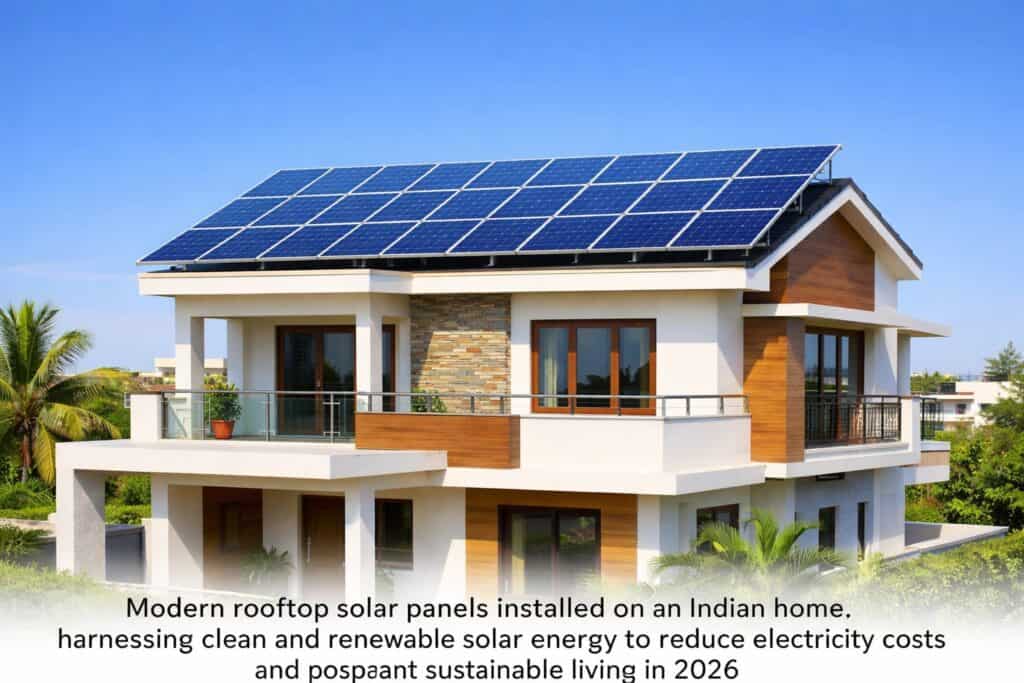
Why Indian Homes Should Shift to Solar Power in 2026
Rising Electricity Bills
Electricity tariffs across India continue to increase every year. Solar panels help you generate your own power and protect you from future price hikes.
Improved Solar Panel Technology
Modern solar panels in 2026 are more efficient, compact, and durable. They perform well even in cloudy or low-light conditions.
Government Support & Subsidies
Residential rooftop solar systems are supported through subsidies, net metering, and simplified approval processes in many states.
Clean & Sustainable Energy
Solar energy reduces carbon emissions and helps India move towards energy independence.
Types of best Solar Panel for Home Use in India
Understanding solar panel types is essential before making a decision.
Monocrystalline Solar Panels – Best Choice in 2026
Monocrystalline panels are considered the best solar panels for home use in India due to their high efficiency and long lifespan.
Advantages:
High efficiency (20–23%)
Requires less roof space
Better performance in low sunlight
Sleek black appearance
Longer lifespan
Disadvantages:
Slightly higher cost
Best for:
Urban homes, apartments, limited roof space
Polycrystalline Solar Panels – Budget-Friendly Option
Polycrystalline panels are popular among homeowners looking for an affordable solution.
Advantages:
Lower cost
Decent efficiency (16–18%)
Suitable for larger rooftops
Disadvantages:
Requires more roof area
Slightly lower performance in high temperatures
Best for:
Independent houses with ample roof space
Thin-Film Solar Panels – Not Ideal for Homes
Thin-film panels are lightweight and flexible but are rarely used for residential rooftops.
Why not recommended?
Low efficiency
Shorter lifespan
Requires large installation area
How to Choose the Right Solar Panel Capacity for Your Home
Selecting the correct system size is crucial for maximum benefit.
Recommended Solar Capacity
| Capacity | Home Size | Monthly Consumption |
| 1 kW | 1 BHK / Small Home | 100–150 units |
| 2-3kW | 2 BHK | 150-250 units |
| 3-4kW | 3 BHK | 250-350 units |
| 5kW or more | Large Home/Villa | 400+ units |
Pro Tip:
Always consider future electricity usage such as air conditioners, EV chargers, or additional appliances.
Key Features of the Best Solar Panel for Home Use (2026)
High Efficiency Rating
Choose panels with 19% or higher efficiency for better energy generation in limited space.
Long Warranty
Performance warranty: 25 years
Product warranty: 10–15 years
Durability for Indian Climate
Panels must withstand:
High summer temperatures
Heavy rainfall and humidity
Dust and pollution
Quality Certification
Ensure panels meet national and international quality standards for safety and performance.
Solar Panel Price for Home Use in India (2026)
Approximate installation cost (prices may vary by state and installer):
| Solar System Size | Estimated Cost (₹) |
| 1 kW | ₹55,000 – ₹75,000 |
| 2 kW | ₹1.1 – ₹1.4 lakh |
| 3 kW | ₹1.5 – ₹1.9 lakh |
| 5 kW | ₹2.5 – ₹3.2 lakh |
Government subsidies can significantly reduce the final cost for residential users.
On-Grid, Off-Grid, or Hybrid – Which Solar System Is Best?
On-Grid Solar System
Connected to electricity grid
Excess power exported via net metering
Most affordable option
Best for: Areas with reliable power supply
Off-Grid Solar System
Uses batteries
Works during power cuts
Higher initial cost
Best for: Remote or rural
areas with frequent outages
Hybrid Solar System – Best Overall in 2026
Combines grid + battery
Provides backup during outages
Optimizes savings and reliability
Best for: Most Indian households in 2026
Installation Process – What to Expect
Roof inspection and shadow analysis
Load calculation and system design
Panel mounting and inverter installation
Electrical wiring and safety checks
Net-metering application and approval
System commissioning
A standard home installation usually takes 2–5 days.
Maintenance & Lifespan of Solar Panels
Solar panels require minimal maintenance:
Clean panels every 2–3 months
Check wiring and inverter annually
Monitor generation through mobile apps
With proper care, solar panels last 25–30 years.
Is Installing Solar Panels Worth It in 2026?
Yes, absolutely.
Benefits include:
Break-even period of 4–6 years
Free electricity for decades
Increased property value
Protection against power cuts
Lower carbon footprint
Common Mistakes to Avoid While Buying the best Solar Panel for home use in India
Choosing the cheapest panel without checking quality
Ignoring roof orientation and shading
Installing undersized systems
Not applying for net metering
Hiring inexperienced installers
Final Verdict – Best Solar Panel for Home Use in India (2026)
For most Indian homes, monocrystalline solar panels combined with a hybrid solar system are the best choice in 2026. They offer high efficiency, long life, excellent performance, and strong financial returns.
If you plan properly and choose the right system, solar energy can completely transform your household electricity experience.
FAQs – Best Solar Panel for Home Use in India
How long does it take to recover the solar investment?
Typically 4–6 years, depending on usage and tariff.
Do solar panels work during monsoon and winter?
Yes, they generate power even in cloudy conditions.
Can I run AC on solar power?
Yes, with proper system sizing.
Is rooftop solar safe for buildings?
Yes, when installed by trained professionals.
Disclaimer
The information provided in this article is for general informational purposes only. Solar panel prices, government subsidies, specifications, and installation policies may vary by location, electricity distribution company, and time. Readers are advised to verify the latest details with authorized solar installers, manufacturers, or official government sources before making any purchase or installation decision. The author is not responsible for any financial or technical decisions taken based on this information.
Follow Profitpiligrim.com for more news